

Co-founder · Tech
Sagnik
Writes the scanner, ships the blog, and answers every technical support email himself. Started Autter after one too many Friday deploys went wrong.

Meet your new control layer. Always at this desk, running every pull request before it merges, because reading code is not the same as running it.
One Friday afternoon, a pull request written with an AI assistant sailed through every check we trusted. What happened over that weekend became a company.
Linter green, syntax valid, a human reviewer approves it. Nothing looks unusual.
The change ships with the rest of the release. Everyone goes home for the weekend.
The AI had invented a library. The import was convincing, syntactically correct, and pointed at nothing.
Half a day of tracing and rollback coordination, all to land a four-line fix.
We went looking for a tool that runs code before merge, verifies imports against real registries, and maps what a change can break. There wasn't one. So we built the control layer we needed ourselves.
Reading code is not running it. Autter treats every pull request the way a careful harbour auditor treats a ship at the dock: open the crates, check the cargo, measure the reach.
Every dependency is confirmed against real registries, so phantom packages never reach your main branch. Your code actually runs in an isolated sandbox, and the test suite is compared against the base branch instead of just linted.
Exposed credentials, removed authentication, and known vulnerabilities get caught before deploy, not after. And the more of your codebase a change touches, the harder Autter looks before it lets the merge through.
A check you can ignore is just advice, so Autter blocks the merge button. That is non-negotiable. Reading code is not running it, and execution is the only pre-production check that catches what static analysis cannot see.
Risk is damage multiplied by spread. A one-line change to a shared helper deserves more scrutiny than a hundred lines in a leaf. We would rather catch five real issues than flag fifty uncertain ones, because a tool people learn to ignore is actively harmful.
Every finding arrives with an explanation and a fix, not just a verdict, because the maintainer is the customer. We started from scratch in 2026: tools built for human-written code were not built for this landscape.
Autter is a small team on purpose. Fewer people means shorter routes between a support email and the person who can actually fix the thing.
Co-founder · Tech
Writes the scanner, ships the blog, and answers every technical support email himself. Started Autter after one too many Friday deploys went wrong.

Co-founder · GTM
Runs go-to-market: positioning, partnerships, and getting Autter in front of the teams who need it. If you have heard of us, that is her doing.
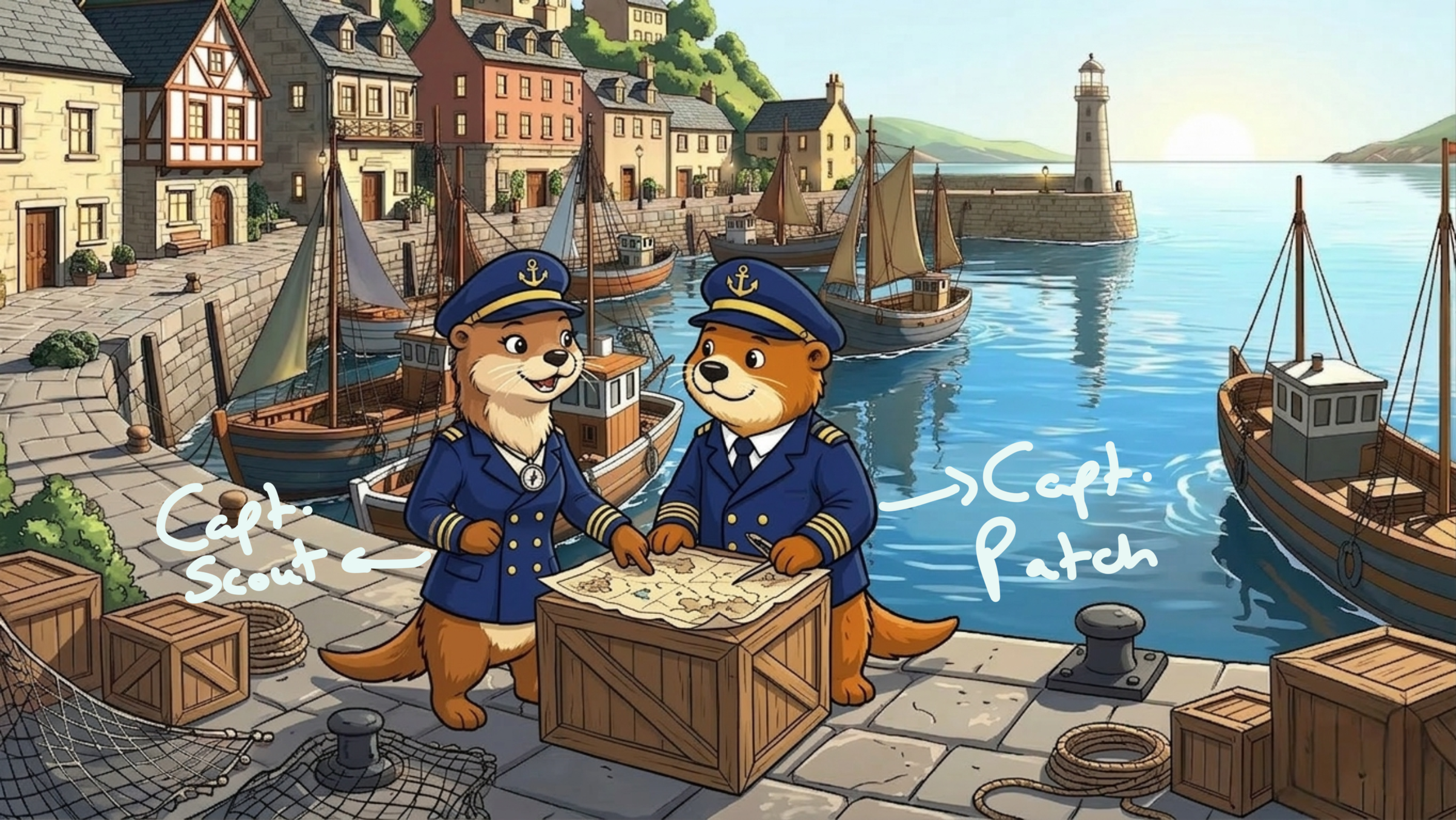
Harbour Auditor
The otter on the gate. Opens every crate instead of trusting the manifest, and keeps the only current map of the whole town.
Next aboard
We hire slowly and deliberately. If governing what merges is the problem you want to spend your days on, we want to hear from you.